How Cannabis Stickers and Labels Are Actually Made: Inside an 11 Color Facility
Prepress, 11 color UV printing, lamination, Summa and Kongsberg cutting and QC. A step by step look at how a cannabis label gets made in our own facilities.
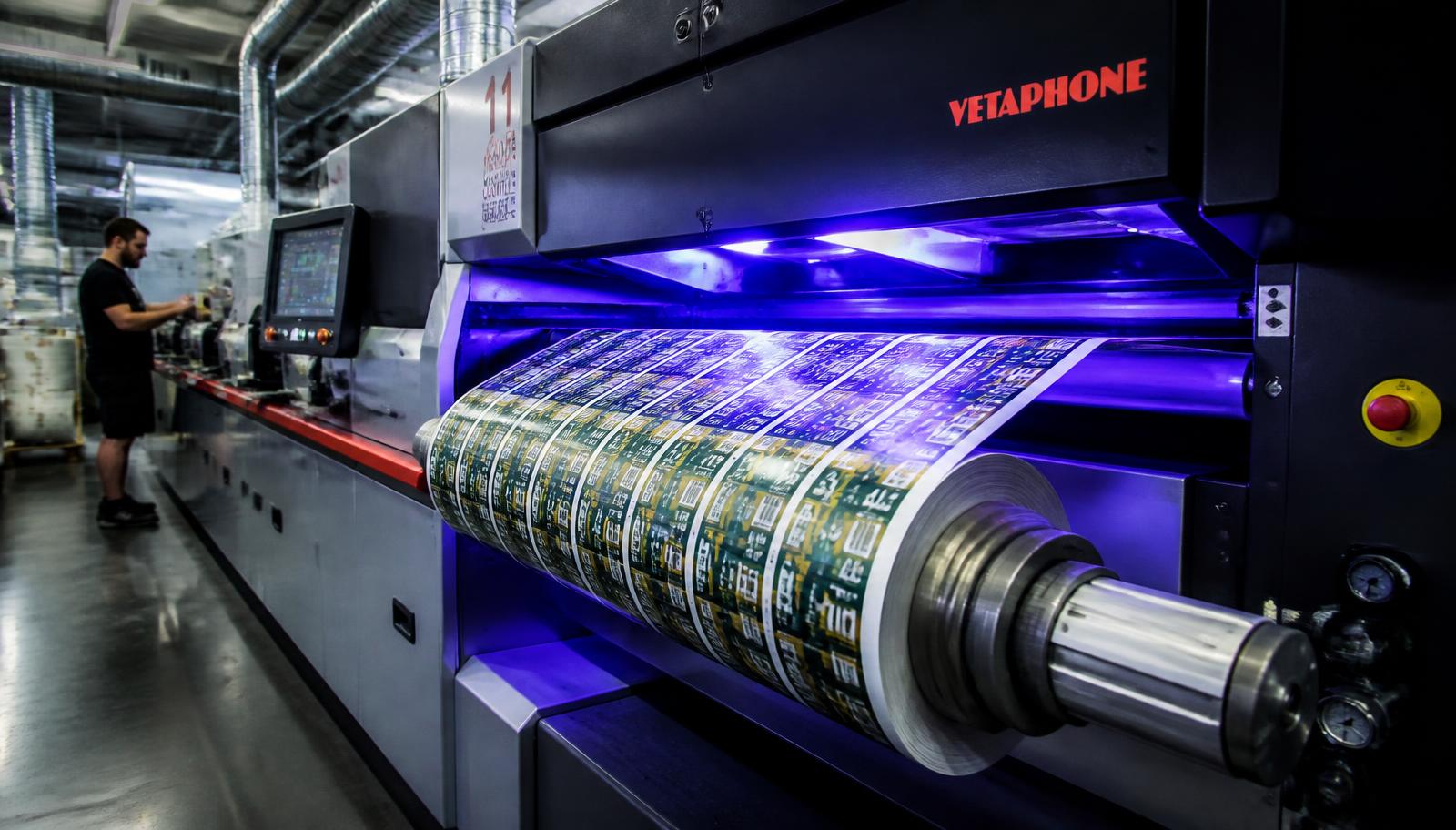
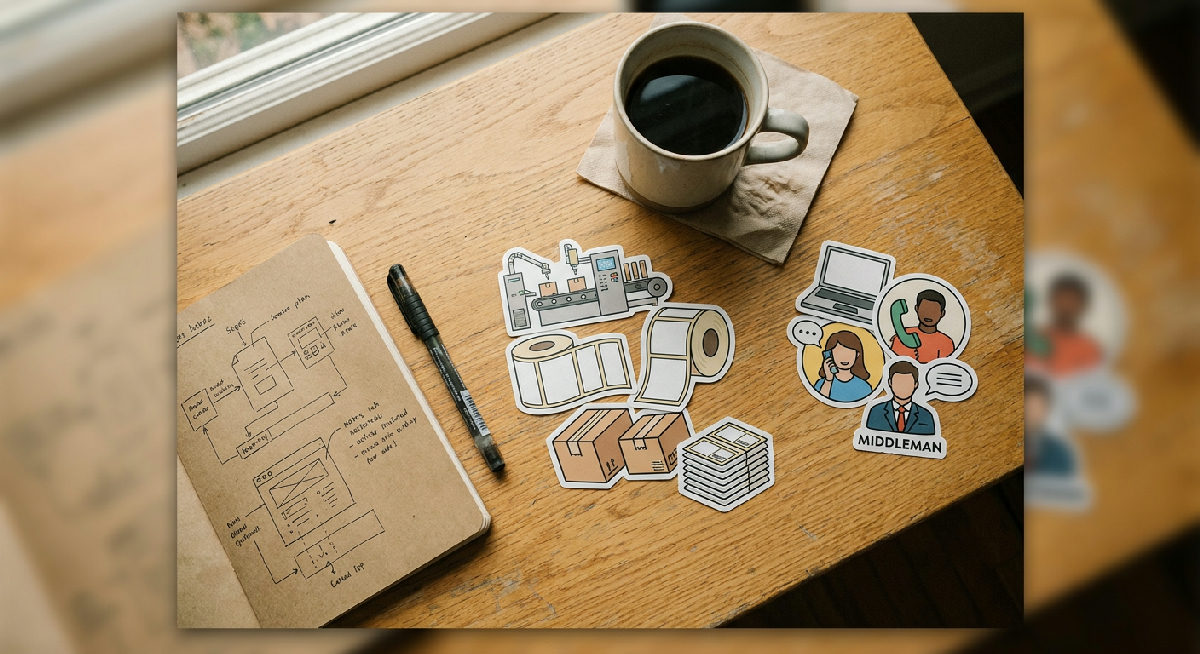
Most cannabis brands buy labels from a company that does not own a press. The order gets brokered to whichever shop has capacity, the color drifts between reorders, and nobody can tell you why the third run looks different from the first. We took the other route: our own production floor, our own presses, our own cutters. Roughly 30,000 square feet across two facilities in Florida and Greenville, South Carolina, printing and cutting every job in house.
Here is exactly what happens to a cannabis label between the file you upload and the roll that lands on your packaging line.
Step 1: Prepress, where most orders are saved
Every file gets opened by a human before it goes near a press. We check six things:
Resolution. 300 DPI at final print size. A 72 DPI web logo scaled to 3 inches will print soft and there is no software fix.
Color space. CMYK working file, with any brand Pantone identified so we can match it on an extended gamut press.
Bleed and safety. 0.125 inch bleed on every edge, 0.125 inch safe margin inside the trim for critical copy.
Cut line. A dedicated vector path in a named spot color, not a drawn black outline.
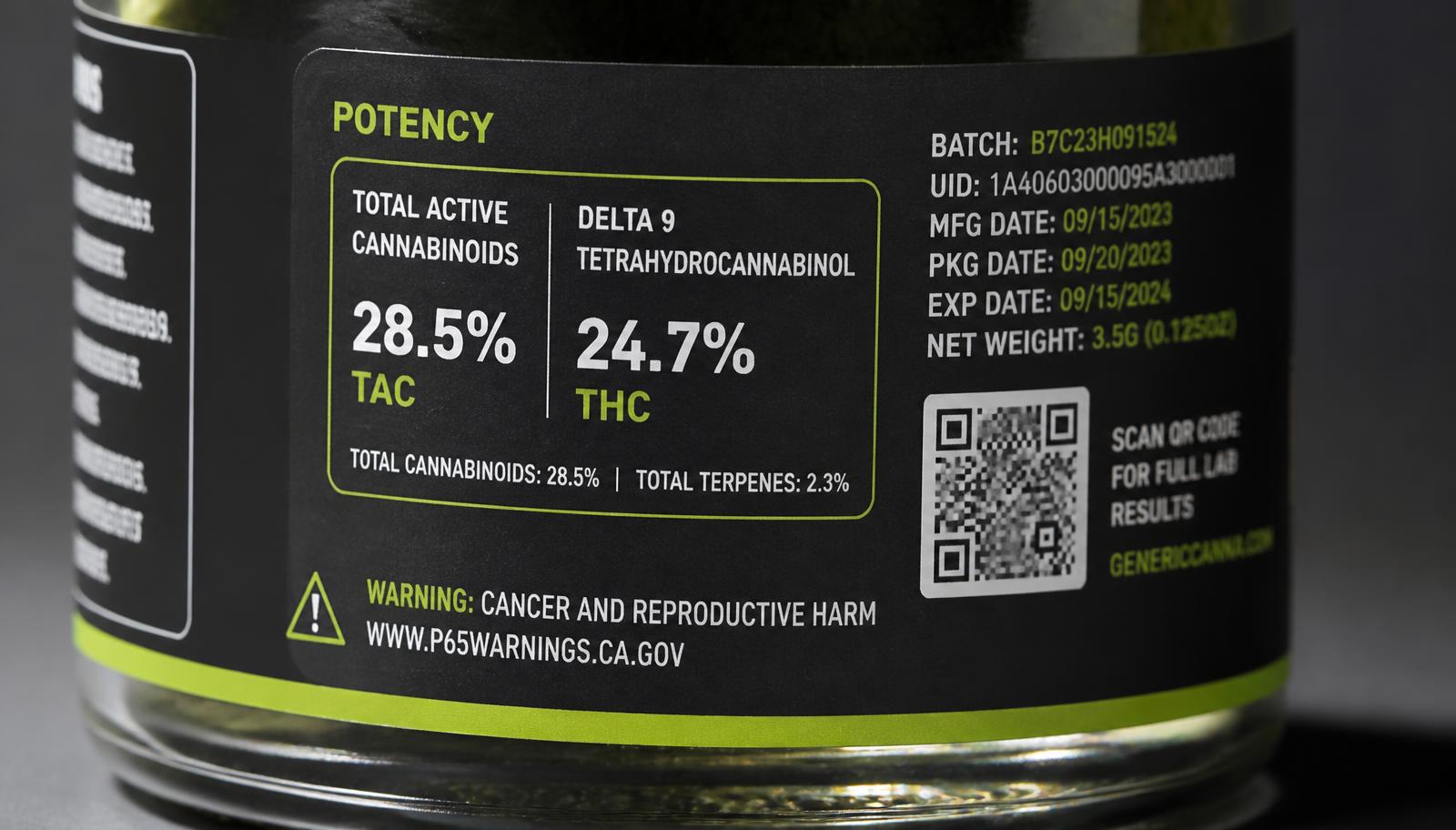
Type size. Warning blocks and universal symbols measured against the minimums the artwork claims to meet.
Fonts. Outlined or embedded, because a missing font substitution can silently reflow a compliance panel.
Roughly a third of first time cannabis files need at least one fix. Catching it here costs an email. Catching it after 10,000 impressions costs a reprint.
Step 2: Printing on 11 color, not 4 color
This is the part that separates a jar that pops on a dispensary shelf from one that looks flat.
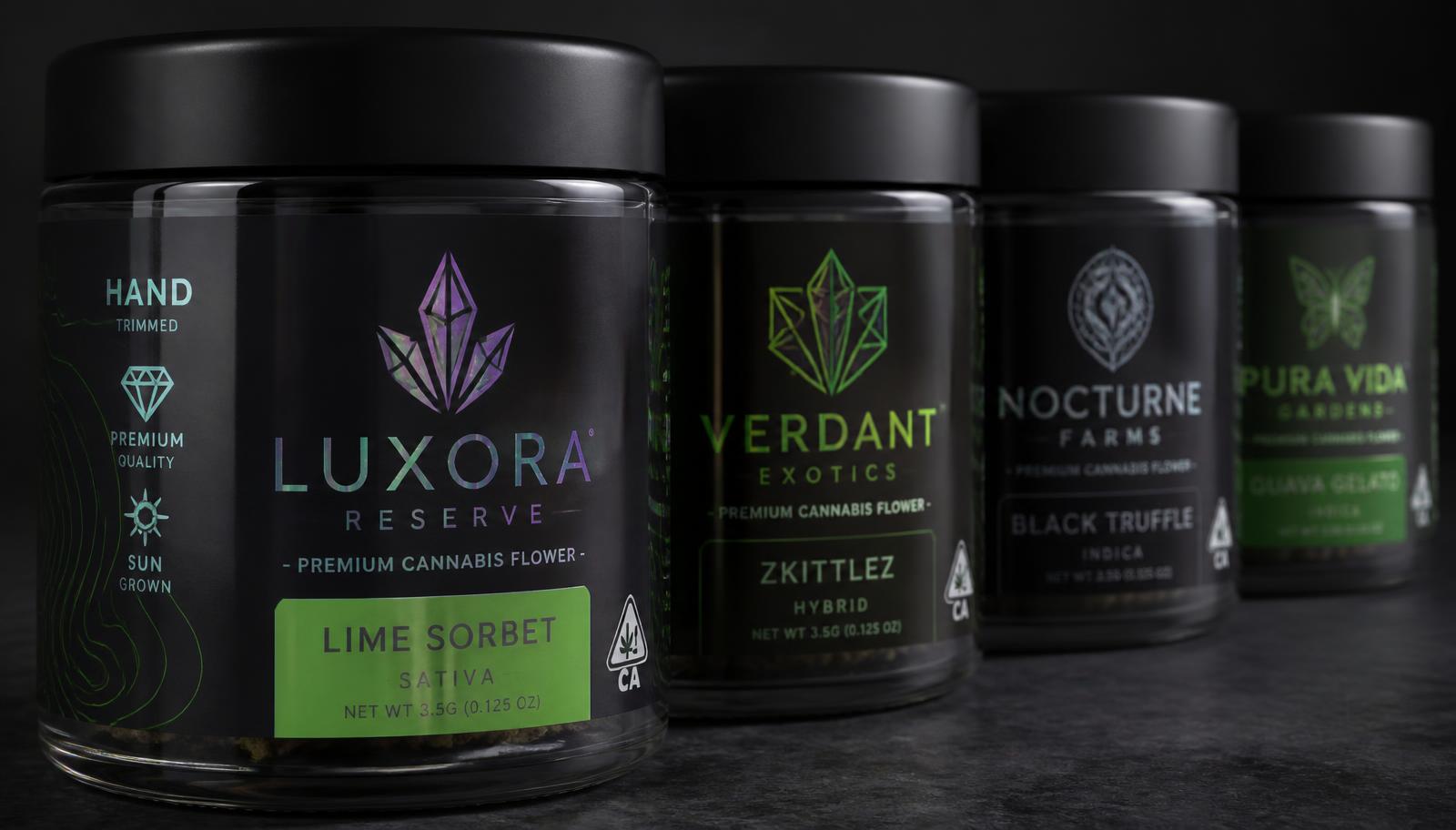
Standard commercial printing uses four process inks: cyan, magenta, yellow and black. Four inks can reproduce a large chunk of the visible spectrum, but they fall down in exactly the places cannabis branding lives. Deep saturated purple. Neon lime and electric green. Vivid orange. Rich blacks that stay black instead of going muddy brown. Smooth gradients that do not band.
Our presses run 11 color Epson UltraChrome ink sets, adding colors like orange, green, violet, light inks and a dedicated white channel on top of the four process colors. Practically, that means:
| Effect | 4 color CMYK | 11 color extended gamut |
| --- | --- | --- |
| Neon lime and electric green | Dull, shifted toward olive | Hits the actual brand color |
| Deep purple | Tends toward navy or muddy | Saturated and clean |
| Brand Pantone match | Approximate | Close match on most spot colors |
| Small reversed type | Fills in at edges | Holds counters and detail |
| White under clear | Not available | Dedicated white ink layer |
That white ink layer is what makes clear labels work. Print a light logo on clear film with no white behind it and you can see the flower through your own artwork. We lay white where the design needs opacity and leave it out where you want true transparency, in a single controlled pass.
We also run Mimaki UV flatbed and roll to roll systems for specialty substrates, rigid media and applications where an instantly cured UV ink film is the right answer.
Step 3: Lamination, the step cheap printers skip
An unlaminated print is a print. A laminated print is a label.
Laminate is a clear film applied over the printed surface. It does four jobs: blocks moisture, resists abrasion from handling and packaging lines, protects ink from UV fade, and stops solvents and terpene residue from attacking the print. Our stock is laminated 3M and General Formulations vinyl and BOPP, rated five years outdoors. Nothing in a dispensary or a customer's kitchen drawer approaches that level of exposure.
Gloss laminate gives maximum color depth and the best scuff resistance. Matte laminate gives a soft premium hand and kills glare under display case lighting. Both are fully waterproof; the difference is finish, not protection.
Step 4: Cutting on Summa and Kongsberg
Printing is only half the job. Cutting is what makes a die cut sticker a die cut sticker and a jar label a jar label.
We run Summa flatbed cutters and a Kongsberg X24 CNC cutting table, with additional cutter capacity being added as cannabis volume grows. Optical registration reads printed marks and aligns the blade to the artwork, so the cut follows your outline instead of a nominal position. Depth control is set per material: kiss cut through the face stock only for sheets and rolls, full die cut through the backing for individual pieces.
Practical consequences for a cannabis operator:
No template lock in. If your logo is a leaf, a jar silhouette or an irregular blob, that is the cut line.
Sheet layouts with mixed SKUs. Multiple strains on one sheet, each kiss cut to its own outline.
Roll orders on the right core and wind direction for your applicator, instead of a stack of sheets your line cannot use.
Rigid and thick media handled on the CNC table rather than rejected.
Step 5: Quality control and packing
Every job is checked against the approved proof for color, registration, cut accuracy and legibility of the smallest type on the label. Roll orders get spliced, counted and wound to the specified core and direction. Sheet orders get backing checked so labels peel cleanly rather than tearing at the corner.
Why factory direct matters for cannabis specifically
Cannabis has three characteristics that punish brokered printing.
Reorder frequency. New strain drops mean new SKUs constantly. If color drifts between vendors, your shelf presence fragments.
Compliance risk. A broker cannot tell you why your warning type printed at 5.5 points instead of 6. The person who ran the press can.
Timeline pressure. Harvest schedules do not slide because a label vendor found capacity somewhere else. We schedule across two facilities and control the queue.
Specifications at a glance
Two facilities, roughly 30,000 square feet of production, Florida and Greenville, South Carolina
11 color Epson UltraChrome presses plus Mimaki UV flatbed and roll to roll
Summa flatbed cutters and Kongsberg X24 CNC, expanding
Laminated 3M and General Formulations vinyl and BOPP, five year outdoor rating
White ink layer for clear and specialty substrates
25 piece minimum, no plate fees, no setup fees
In house prepress on every order
Made in the USA, never outsourced
Frequently asked questions
Do you actually own your equipment?
Yes. Presses, laminators and cutters are ours, in our buildings, run by our staff.
Will my reorder match my first run?
That is the point of controlling the press. We keep job settings and color targets on file so run three matches run one.
Can you match a Pantone brand color?
On an extended gamut press we can match most spot colors closely. Send the Pantone reference with your file and we will tell you honestly before you print if a specific color is out of reach.
Configure size, material, and quantity, instant pricing, free digital proof.
What is the smallest order you will run? 25 pieces. No plate or setup fee makes short runs viable. See small batch vs large run printing.
Where do I start? Price a job on cannabis labels for jars, pouches and tubes, or cannabis die cut stickers for merch and exit bags. The full format and material rundown is in the complete guide to cannabis labels and stickers.
Every order on this page is printed, laminated, and cut in-house. No brokers, no outsourcing, no template-only shapes.
More from the blog
Formats, materials, compliance panels, batch codes and real per label pricing for cannabis labels and stickers, written by the factory that prints them.
TAC means total active cannabinoids. Here is how it differs from THC and total THC, how labs calculate it, and how to lay out a potency panel that stays legible.
Small Batch vs Large Run Cannabis Label Printing
Real per piece pricing from 25 to 10,000 labels, where the cost curve flattens, and the static plus variable split that saves cannabis operators thousands a year.
Order custom labels.
Factory direct prices. 11-color Epson UltraChrome printing. Free shipping over $75. Most orders ship in 3 days.
Design your own, pick a sticker type
Cut to any shape
Peel-friendly backing
Multiple designs, one sheet
Rainbow shimmer finish
Transparent vinyl
Scan-to-link
Premium custom stickers made in the USA. Fast turnaround, free shipping on orders over $75.