
Tincture Bottle and Vape Cartridge Labels
The hardest labels in cannabis: two inches of circumference, a full required panel, and a surface that gets handled with oily fingers. Wrap-around vinyl, oil-resistant laminate, type that stays legible.
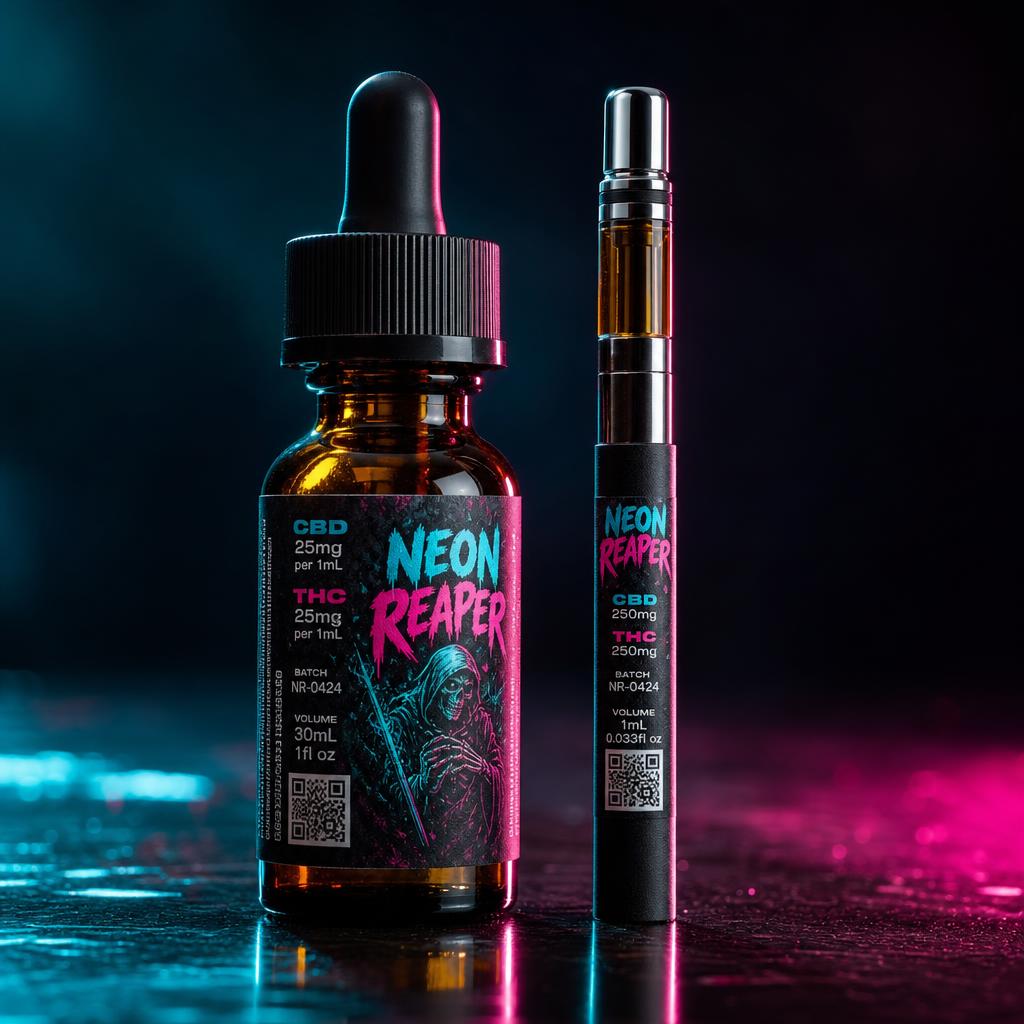
Small-format cannabis packaging is where label printing gets genuinely difficult. A 30ml dropper bottle gives you about 3 inches of usable circumference and an inch and a half of height. A 1g cartridge gives you less than that. Into that space you need brand identity, potency, volume, batch code, a warning and often a QR, and the whole thing gets held between an index finger and a thumb coated in whatever the product is.
Two things make it work. The first is a wrap-around layout rather than a flat sticker: the label continues around the container so the panel has room to breathe instead of being crushed onto one face. The second is oil-resistant premium lamination, which stops ink transfer and edge lift when the container gets handled.
We print these on the same 11-color press as everything else, which is what allows 6pt type on a label barely over an inch tall to still resolve cleanly.
- Typical size
- 3" x 1.5" wrap for 30ml tinctures
- Cartridge wrap
- 2" x 0.75" for 1g carts
- Material
- White or clear 3.4 mil vinyl
- Lamination
- Premium, oil and solvent resistant
- Minimum order
- 25 labels
- Overlap
- Add 0.25" for a self-sealing wrap
Sizes for common containers
Measure circumference, not diameter, you need the wrap length plus a quarter inch of overlap so the label seals to itself rather than to the glass.
- 15ml dropper bottle: about 2.25" x 1.25" wrap
- 30ml dropper bottle: about 3" x 1.5" wrap
- 0.5g cartridge: about 1.75" x 0.6" wrap
- 1g cartridge: about 2" x 0.75" wrap
- Disposable pen: about 2.5" x 0.8" wrap, placed on the flat body section
- Add 0.25" overlap to any wrap so the label bonds to itself
Laying out a panel this small
Treat the wrap as three zones. Front third: brand mark, product name, the thing a customer sees on the shelf. Middle third: potency figures, CBD and THC in milligrams, per millilitre and per container, plus volume. Back third: batch, lot, date, warning statement and QR code.
Rotating the required text ninety degrees so it runs vertically along the wrap is a legitimate trick here and buys you real space on a short container. Keep the QR upright regardless, rotated codes still scan, but users will fight the angle.
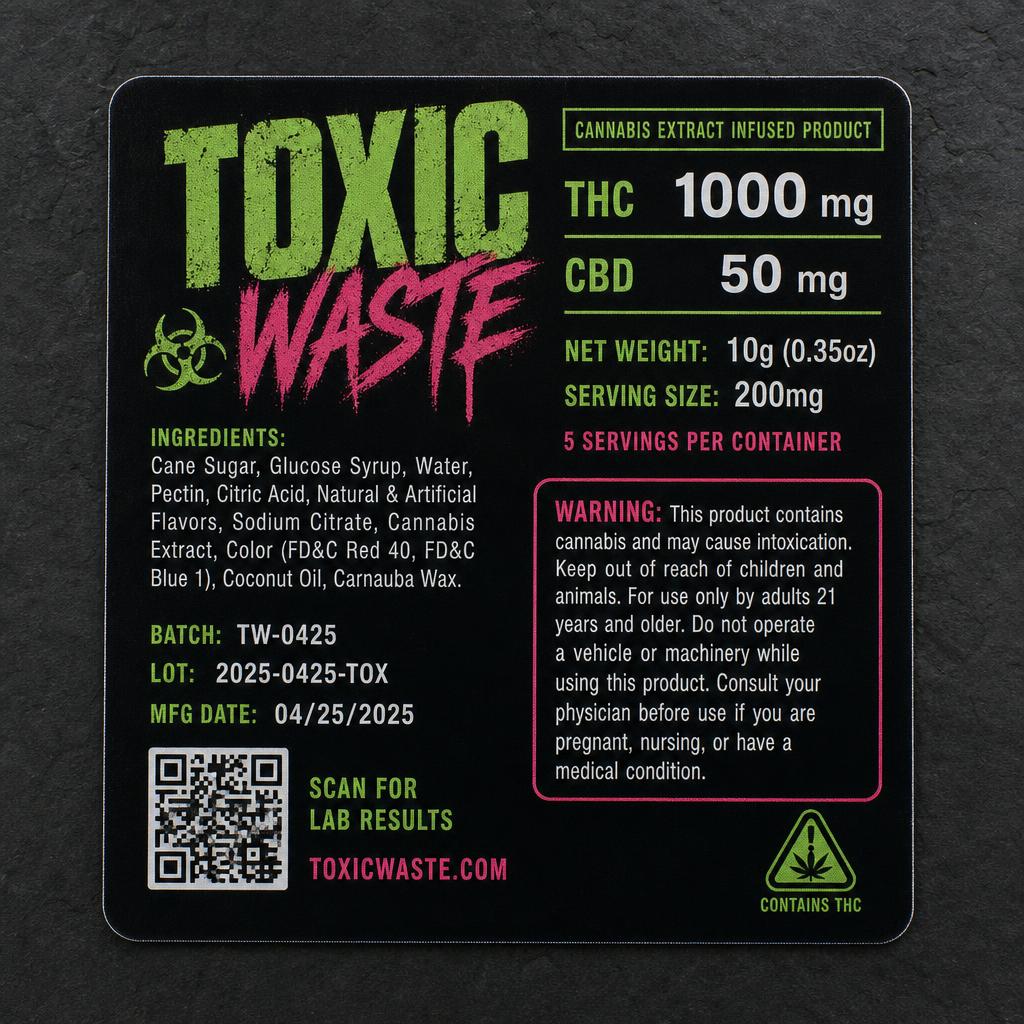
Oil resistance is the whole ballgame
Tinctures leak a little at the dropper. Cartridges get residue at the mouthpiece. Topicals transfer to whatever touches them. Unlaminated ink on any of those surfaces will smear or lift, and a smeared batch code on an infused product is a real problem, not a cosmetic one.
Premium lamination is not optional here. It's the difference between a label that reads at the point of sale and one that reads six months into a customer's nightstand drawer.
Clear vinyl on glass, white vinyl on everything else
Amber and cobalt dropper bottles look best with a clear-vinyl label so the glass color shows through, but only if your artwork is light-on-dark and heavy enough to hold against the bottle color. Anything with fine dark text should be on white vinyl.
Cartridges and pens are usually anodized black or matte metal, which means white vinyl almost every time. Clear on black metal makes small text unreadable under retail lighting.
Frequently asked questions
What size label fits a 30ml tincture bottle?
About 3" x 1.5", which wraps a standard 30ml dropper with a quarter inch of overlap so the label bonds to itself. For 15ml bottles, drop to roughly 2.25" x 1.25".
Can you print labels small enough for a vape cartridge?
Yes. A 1g cartridge typically takes a 2" x 0.75" wrap and a 0.5g cart around 1.75" x 0.6". At that size, keep required copy at 6pt and consider running it vertically along the wrap.
Will the label survive oil residue on a dropper or cart?
With premium lamination, yes, it resists oils and solvents and prevents the ink transfer you get on unlaminated stock. We recommend it on every tincture, cartridge and topical order.
Should I use clear or white vinyl on an amber bottle?
Clear looks great if your artwork is bold and light-on-dark. If the label carries fine dark text, most required panels do, go white vinyl so the small type stays readable.
Print it on laminated waterproof vinyl
25 minimum, any shape, any size up to 10 inches. Live pricing while you configure.
Configure cannabis labelsMore in this series
Print specs at a glance
Ready to design yours?
Free proofs · 25 piece minimum · Made in USA
25 minimum, any shape, any size up to 10 inches. Live pricing while you configure, no quote request, no sales call.
Premium custom stickers made in the USA. Fast turnaround, free shipping on orders over $75.
- Die Cut Stickers
- Kids Name Stickers
- All Stickers
Industries
- Service Businesses
- Restaurants
- Breweries
- Real Estate
- Food Trucks
- Stickers in California
- Stickers in Texas
- Stickers in Florida
- Stickers in New York
- Cannabis Label Configurator
- Tincture & Vape Labels
- About Us
- Help Center
- Ready Packs
Knowledge Base
- Cheapest Custom Stickers
- Best Quality Stickers
- Our Printing Equipment
- 5 Year Outdoor Durability
- Why Laminate Matters
- Printer Comparison
Answers
- Cost of 1,000 Stickers
- What to Charge for Stickers
- Cheapest Way to Print
- Cannabis Label Requirements
- Clear Stickers + White Ink
- Sticker Company Comparison
Guides
- Custom Stickers Guide
- Best Sticker Companies
- Stickerine vs StickerMule
- Why Stickerine
- Bumper Stickers
- Waterproof Stickers
- Custom Labels
Compare
- Sticker Mule Alternative
- Vistaprint Alternative
- StickerGiant Alternative
- StickerYou Alternative
- MOO Alternative
- Custom Ink Alternative
- UPrinting Alternative
- Redbubble Alternative
- PrintRunner Alternative
- 48HourPrint Alternative
- Sticker Robot Alternative
- GS-JJ Alternative
- Privacy Policy
- Terms of Service
- Refund Policy
A division of Name Badges, LLC
Explore more
- See all cannabis formats →
- Start designing
- 1-800-243-9227
- Die Cut Stickers
- Kids Name Stickers
- All Stickers
- Service Businesses
- Restaurants
- Breweries
- Real Estate
- Food Trucks
- Stickers in California
- Stickers in Texas
- Stickers in Florida
- Stickers in New York
- Cannabis Label Configurator
- Tincture & Vape Labels
- About Us
- Help Center
- Ready Packs
- Cheapest Custom Stickers
- Best Quality Stickers
- Our Printing Equipment
- 5 Year Outdoor Durability
- Why Laminate Matters
- Printer Comparison
- Cost of 1,000 Stickers
- What to Charge for Stickers
- Cheapest Way to Print
- Cannabis Label Requirements
- Clear Stickers + White Ink
- Sticker Company Comparison
- Custom Stickers Guide
- Stickerine vs StickerMule
- Why Stickerine
- Bumper Stickers
- Waterproof Stickers
- Custom Labels
- Sticker Mule Alternative
- Vistaprint Alternative
- StickerGiant Alternative
- StickerYou Alternative
- MOO Alternative
- Custom Ink Alternative
- UPrinting Alternative
- Redbubble Alternative
- PrintRunner Alternative
- 48HourPrint Alternative
- Sticker Robot Alternative
- GS-JJ Alternative
- Privacy Policy
- Terms of Service
- Refund Policy