
Inside the Stickerine print shop
Our print & cut equipment
Order custom stickers →Ask about our shop
We get asked all the time how our stickers are made and where they come from. Rather than being vague, this page lists the exact hardware we run, with real photos of the equipment class we operate. When you place an order with Stickerine, this is what physically prints, laminates, and cuts your job.
Why this matters
Sticker quality is a function of three things: the ink, the media, and the cut. Cheap sticker shops cut corners on all three, 4-color eco-solvent ink, no lamination, low-tolerance blade cutters. Every machine on this page was chosen because it produces a specific quality standard we're willing to put our name on.
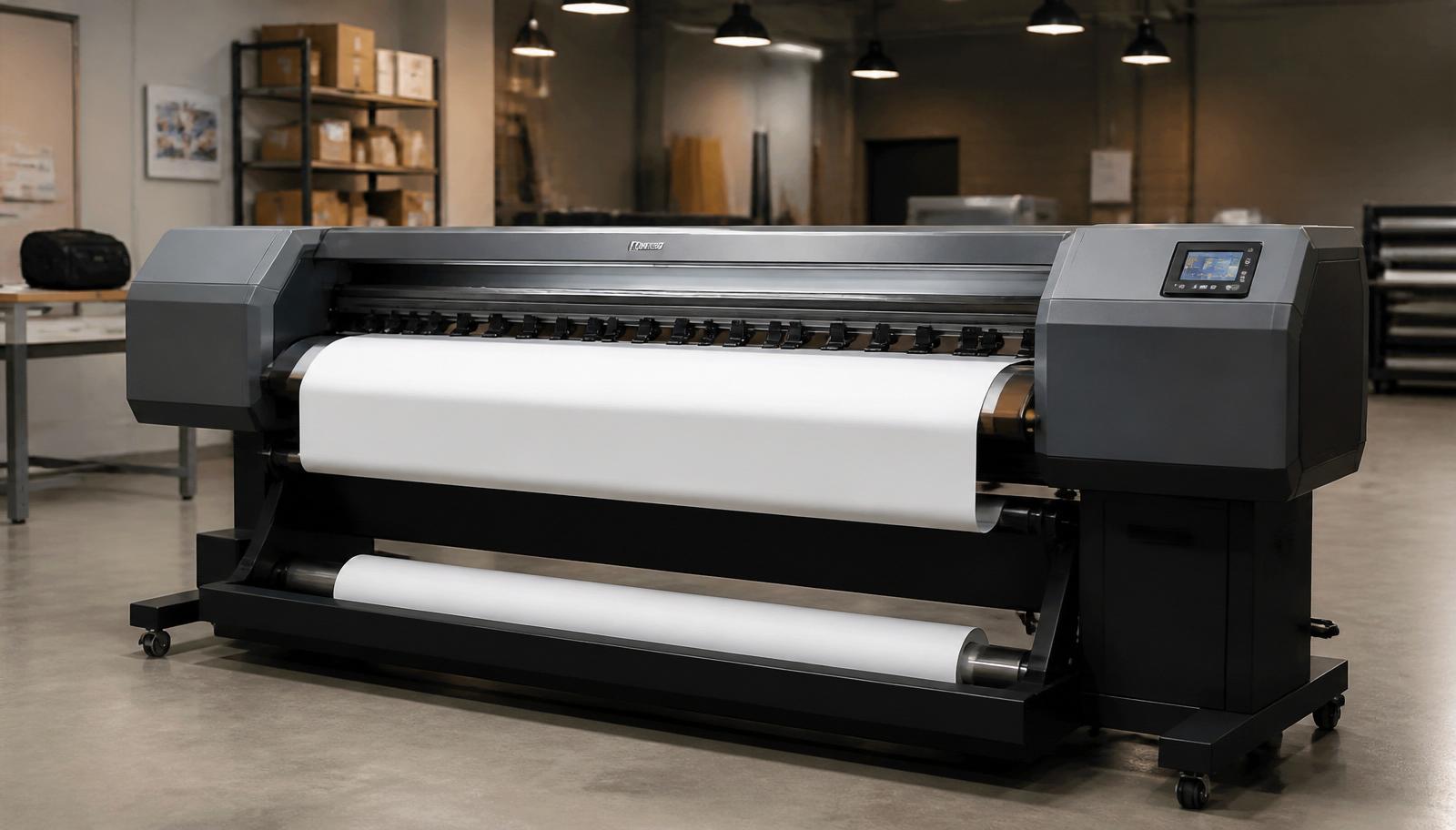
Printer
Epson SureColor S9170, 64" solvent, 11 colors
Our workhorse for vinyl sticker printing. The S9170 uses Epson's UltraChrome GS3 solvent ink in an 11-color set (CMYK + Light Cyan, Light Magenta, Light Black, Light Light Black, Orange, Red, and Green). That expanded gamut is what lets us hit brand colors and photo gradients that a standard 4-color CMYK printer can't touch.
Solvent ink bonds directly into the vinyl (as opposed to sitting on top like aqueous or latex), which is why our stickers survive dishwashers, weather, and years of sun without cracking.
Illustration of the Epson SureColor S9170 class 64-inch solvent printer we operate. Not a photo of our specific shop floor.
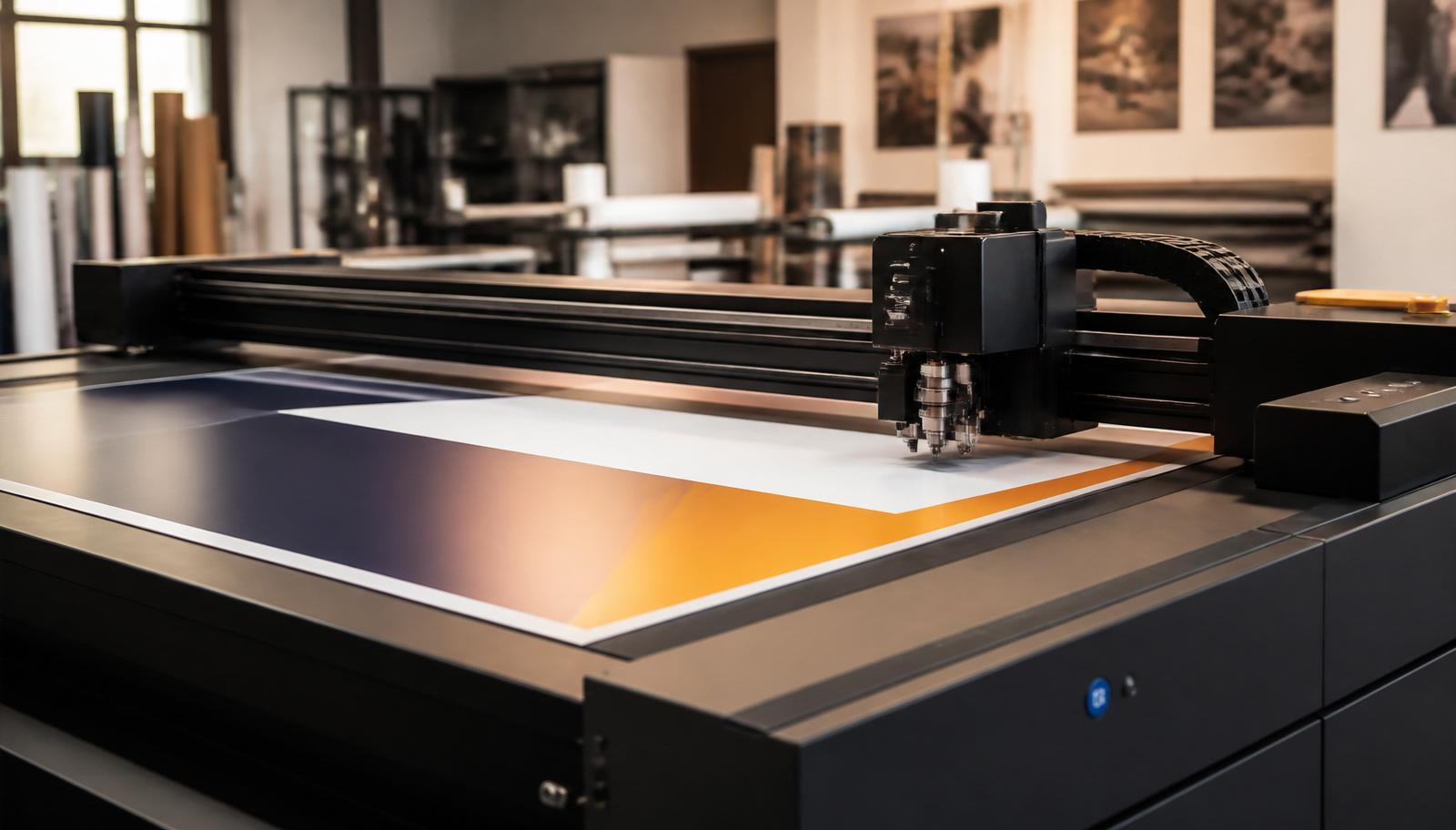
Cutter
Summa F1612, flatbed digital cutter
The F1612 is where your custom die-cut shape actually gets cut. It's a flatbed cutter with a 160 × 120 cm working area and multiple tool heads (drag knife, tangential knife, kiss-cut, creasing). We use it for die-cut stickers, kiss-cut sheets, and precision cuts on rolled vinyl after printing and lamination.
Optical mark registration is why the cut lines up with your artwork within a fraction of a millimeter, even on multi-design sheets where a bad cutter would drift.
Illustration of a Summa F Series flatbed cutter in the class we operate. Not a photo of our specific shop floor.
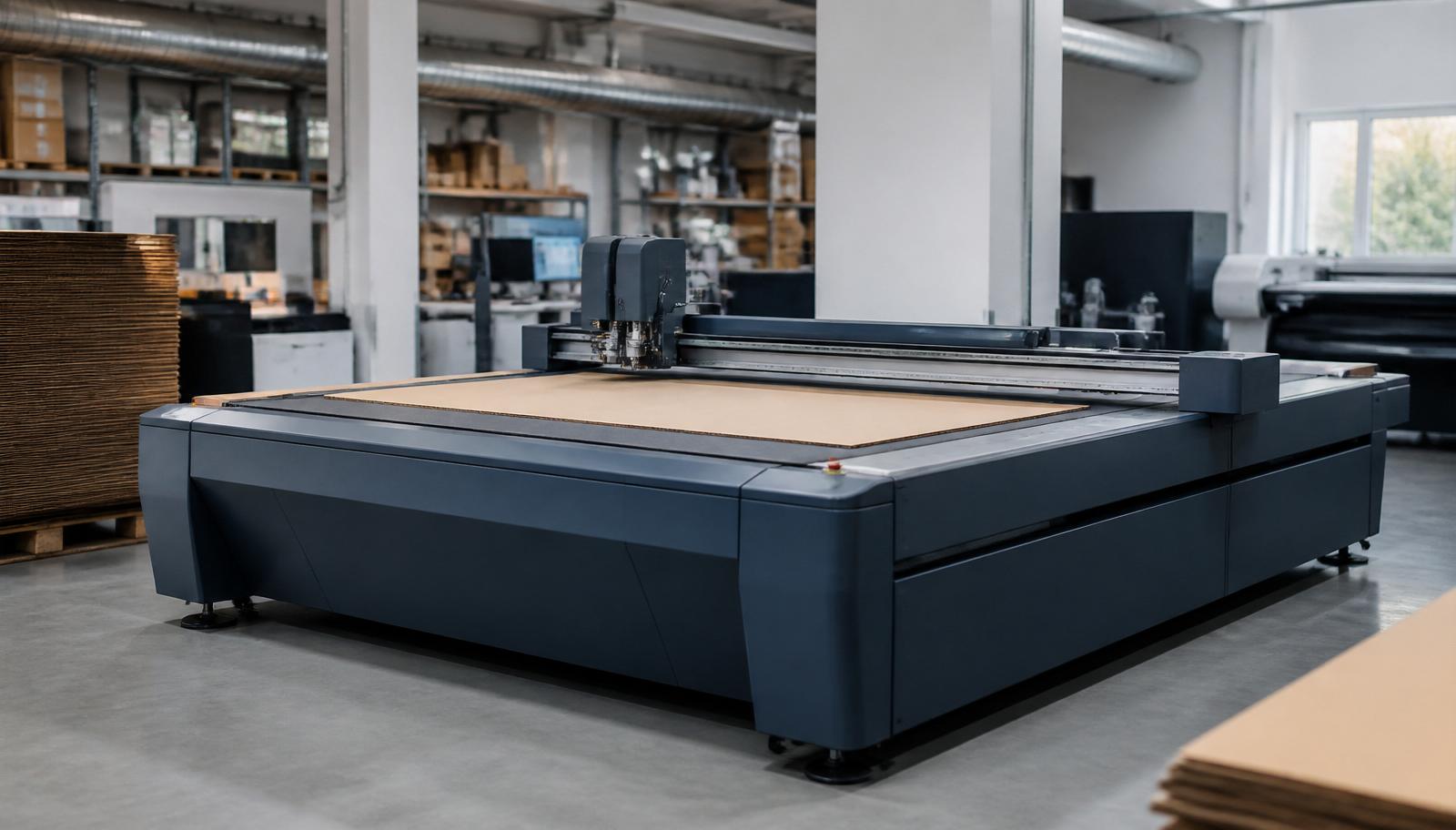
CNC finisher
Kongsberg X24, CNC cutting table
The Kongsberg X24 handles anything the Summa can't, rigid substrates like foam board, coroplast, acrylic, corrugated packaging, and the large-format sign work. Max material size is 1680 × 3200 mm, and it runs multiple tool heads for cutting, routing, creasing, and V-cutting.
This is the machine that lets us do custom wall cutouts, foam board signs, and yard-sign trim work without outsourcing to a sign shop.
Illustration of a Kongsberg X Series CNC cutting table in the class we operate. Not a photo of our specific shop floor.
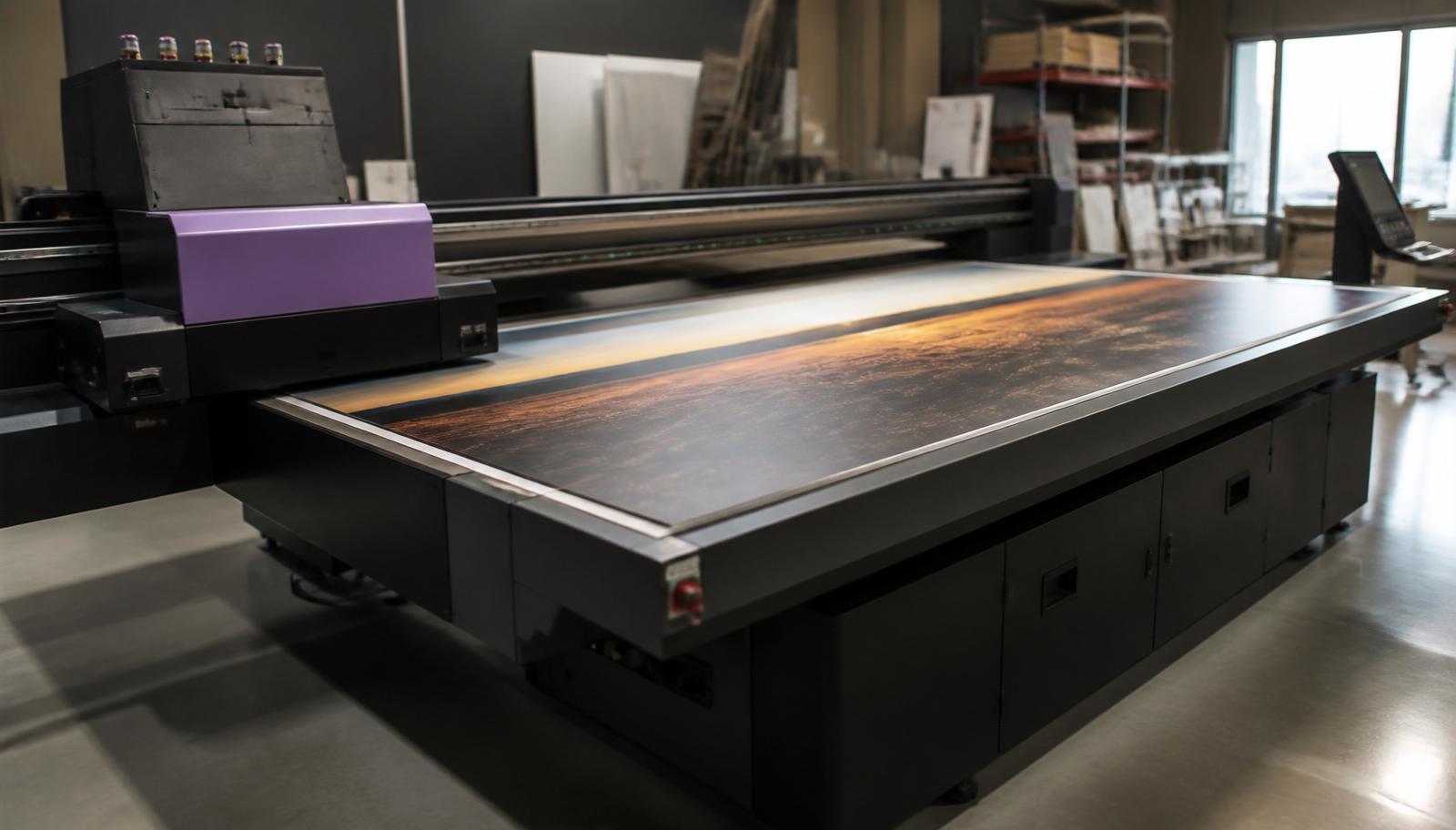
Specialty printer
Mimaki UV-LED flatbed & roll-to-roll
Our Mimaki UV setup handles two jobs the solvent printer can't: printing directly onto rigid substrates (acrylic signs, aluminum, wood, foam board) and running specialty UV-cure jobs where instant cure and scratch resistance matter. The roll-to-roll unit gives us backup capacity on high-volume vinyl runs.
Illustration of a Mimaki UV-LED flatbed in the class we operate. Not a photo of our specific shop floor.
What this equipment mix means for your order
- One shop, one job. Your order doesn't get routed to a network of contract printers. It's printed, laminated, and cut in one facility, usually within 3–5 business days.
- Real color matching. The 11-color Epson gamut plus in-house profiling means we can hit brand PMS colors most 4-color shops can't.
- Waterproof by default. Solvent ink + vinyl + laminate = 5+ year outdoor life on every sticker we ship, not just the premium tier.
- Real proofs. Because we own the equipment, we can print a physical proof and mail it before the full run. Most online sticker shops can only send a digital PDF.
Where the shop is
Stickerine operates two US facilities: our Florida headquarters (customer service, art, order management) and our Greenville, SC print shop (production). Every sticker ships from one of the two.
Order custom stickers →Meet the team
Sticker quality is a function of three things: the ink, the media, and the cut. Cheap sticker shops cut corners on all three, 4-color eco-solvent ink, no lamination, low-tolerance blade cutters. Every machine on this page was chosen because it produces a specific quality standard we're willing to put our name on.
Epson SureColor S9170 | 64" solvent, 11 colors
Summa F1612 | flatbed digital cutter
Kongsberg X24 | CNC cutting table
Premium custom stickers made in the USA. Fast turnaround, free shipping on orders over $75.
- Die Cut Stickers
- Kids Name Stickers
- All Stickers
Industries
- Service Businesses
- Restaurants
- Breweries
- Real Estate
- Food Trucks
- Product Labels
- Stickers in California
- Stickers in Texas
- Stickers in Florida
- Stickers in New York
- Cannabis Label Configurator
- THC Product Labels
- Dispensary Stickers
- Smoke Shop Stickers
- Mylar Bag Labels
- Tincture & Vape Labels
- About Us
- FAQ
- Help Center
- Ready Packs
Knowledge Base
- Cheapest Custom Stickers
- Best Quality Stickers
- Our Printing Equipment
- 5 Year Outdoor Durability
- Why Laminate Matters
- Printer Comparison
Answers
- Cost of 1,000 Stickers
- What to Charge for Stickers
- Cheapest Way to Print
- Cannabis Label Requirements
- Clear Stickers + White Ink
- Sticker Company Comparison
Guides
- Custom Stickers Guide
- Best Sticker Companies
- Stickerine vs StickerMule
- Why Stickerine
- Bumper Stickers
- Waterproof Stickers
- Custom Labels
Compare
- Sticker Mule Alternative
- Vistaprint Alternative
- StickerGiant Alternative
- StickerYou Alternative
- MOO Alternative
- Custom Ink Alternative
- UPrinting Alternative
- Redbubble Alternative
- PrintRunner Alternative
- 48HourPrint Alternative
- Sticker Robot Alternative
- GS-JJ Alternative
- Privacy Policy
- Terms of Service
- Refund Policy
A division of Name Badges, LLC
Explore more
- 1-800-243-9227
- Die Cut Stickers
- Kids Name Stickers
- All Stickers
- Service Businesses
- Restaurants
- Breweries
- Real Estate
- Food Trucks
- Product Labels
- Stickers in California
- Stickers in Texas
- Stickers in Florida
- Stickers in New York
- Cannabis Label Configurator
- THC Product Labels
- Dispensary Stickers
- Smoke Shop Stickers
- Mylar Bag Labels
- Tincture & Vape Labels
- About Us
- FAQ
- Help Center
- Ready Packs
- Cheapest Custom Stickers
- Best Quality Stickers
- Our Printing Equipment
- 5 Year Outdoor Durability
- Why Laminate Matters
- Printer Comparison
- Cost of 1,000 Stickers
- What to Charge for Stickers
- Cheapest Way to Print
- Cannabis Label Requirements
- Clear Stickers + White Ink
- Sticker Company Comparison
- Custom Stickers Guide
- Stickerine vs StickerMule
- Why Stickerine
- Bumper Stickers
- Waterproof Stickers
- Custom Labels
- Sticker Mule Alternative
- Vistaprint Alternative
- StickerGiant Alternative
- StickerYou Alternative
- MOO Alternative
- Custom Ink Alternative
- UPrinting Alternative
- Redbubble Alternative
- PrintRunner Alternative
- 48HourPrint Alternative
- Sticker Robot Alternative
- GS-JJ Alternative
- Privacy Policy
- Terms of Service
- Refund Policy